
dwarf honeysuckle
(Lonicera xylosteum)
This species is Introduced in the United States
Appearance
Lonicera xylosteum is a perennial shrub that can reach 8-10 ft. (2.4-3 m) tall.
Foliage
Leaves are opposite, elliptical, deciduous and 1-2.5 in. (2.5-6.4 cm) long.
Flowers
Flowering occurs in May when white flowers develop in pairs in the axils of the leaves.
Fruit
Fruits (when produced) are dark red berries that are eaten and spread by birds.
Ecological Threat
Lonicera xylosteum is native to Europe and occurs in poor, well-drained soils in full sun.
Resources
- Plant Invaders of Mid-Atlantic Natural Areas - National Park Service and U.S. Fish and Wildlife Service
Selected Images
Maps
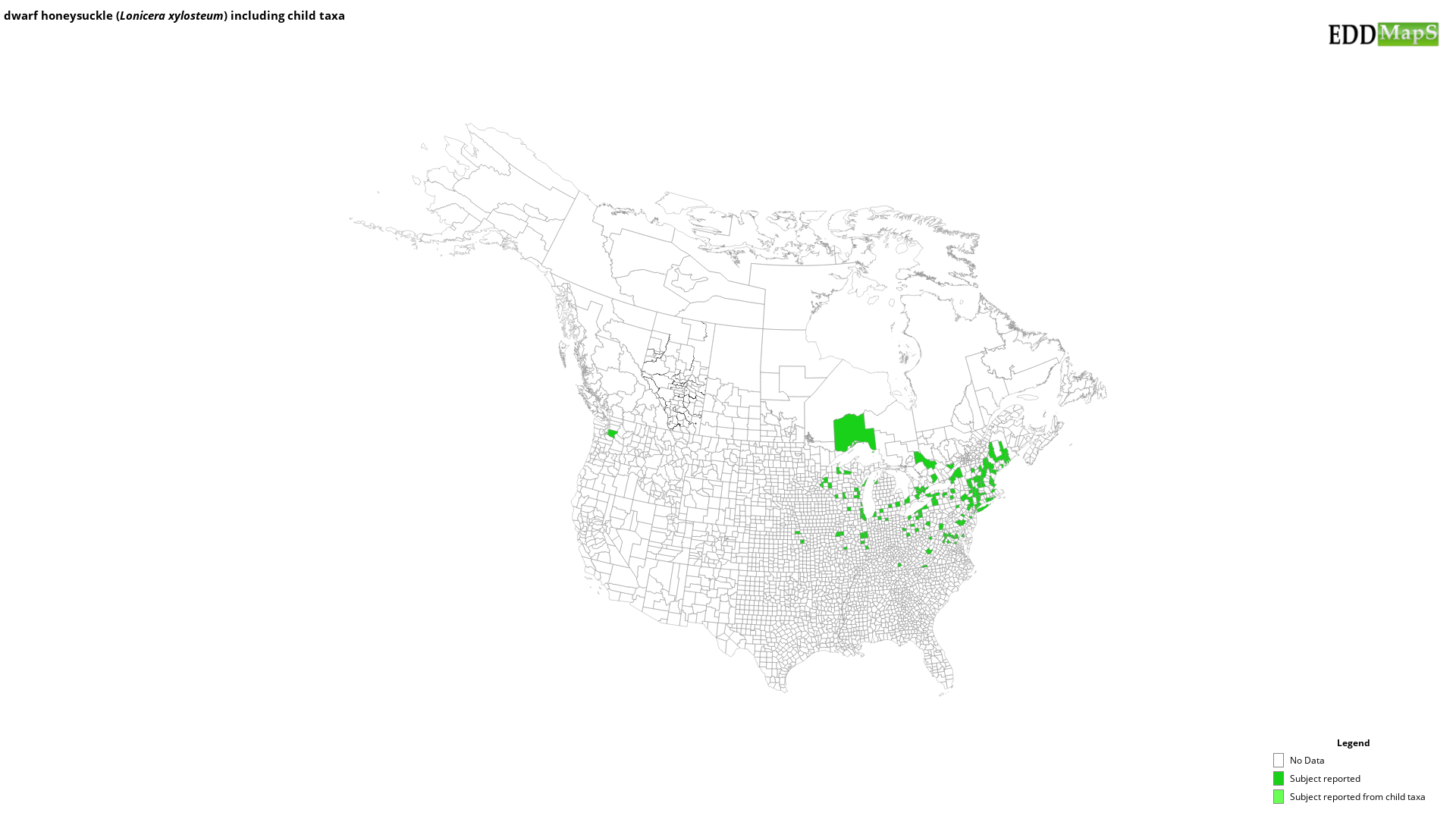
EDDMapS Distribution - This map is incomplete and is based only on current site and county level reports made by experts, herbaria, and literature. For more information, visit www.eddmaps.org
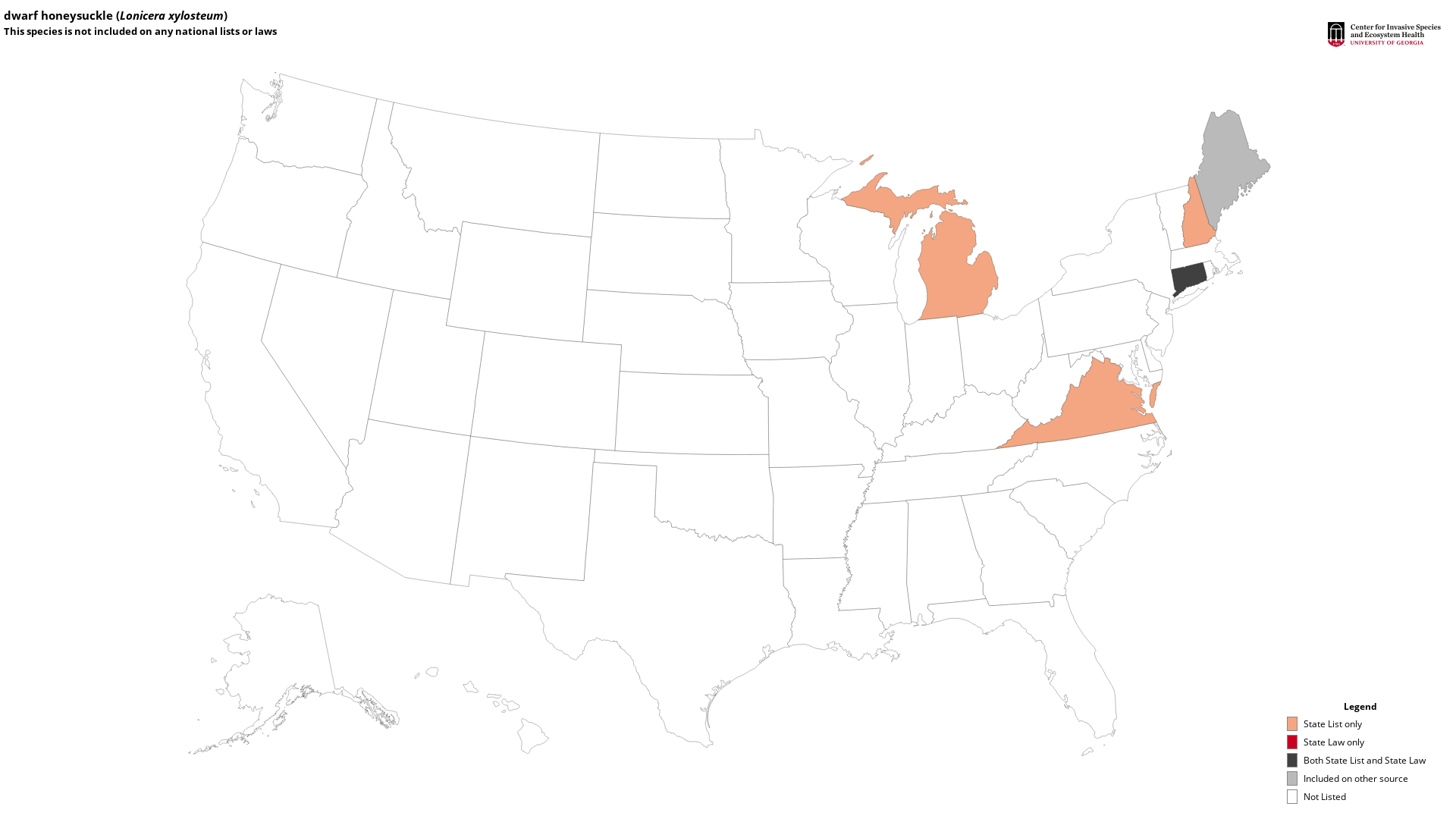
State Lists - This map identifies those states that have this species on their invasive species list or law.
Invasive Listing Sources
- City of Ann Arbor Michigan Parks and Recreation
- Connecticut Invasive Plant List
- Connecticut Invasive Plant Working Group
- Connecticut Noxious Weeds
- Maine Invasive Plants
- New Hampshire Invasive Plant Species Watch List
- Non-Native Invasive Plants of Arlington County, Virginia
- Reichard, Sarah. 1994. Assessing the potential of invasiveness in woody plants introduced in North America. University of Washington Ph.D. dissertation.
- WeedUS - Database of Plants Invading Natural Areas in the United States
Taxonomic Rank
| Domain: Eukarya |
| Kingdom: Plantae |
| Phylum: Magnoliophyta |
| Class: Magnoliopsida |
| Superorder: Asteranae |
| Order: Dipsacales |
| Family: Caprifoliaceae |
| Genus: Lonicera |
| Lonicera xylosteum |
References
Common Name Reference: USDA, NRCS. 2010. The PLANTS Database. National Plant Data Center, Baton Rouge, LA, USA.
Scientific Name Reference: USDA, NRCS. 2010. The PLANTS Database. National Plant Data Center, Baton Rouge, LA, USA.